Clark’s Pest Control is the leading carpenter bee control and pest management provider serving North and South Carolina. If you live in the Carolinas, you’re likely no stranger to pests. But while some pests threaten your health and safety, others attack the integrity of your property instead. Carpenter bees are the second kind.
Carpenter bees are also common across the Carolinas and easy to overlook until the damage is done, so it’s essential to know what to watch for. The sooner you reach out to an experienced carpenter bee exterminator for help, the better.
Clarks Pest Control is proud to be the Carolinas’ trusted solution for a comprehensive range of pest solutions, including safe, effective carpenter bee control.
What Are Carpenter Bees?
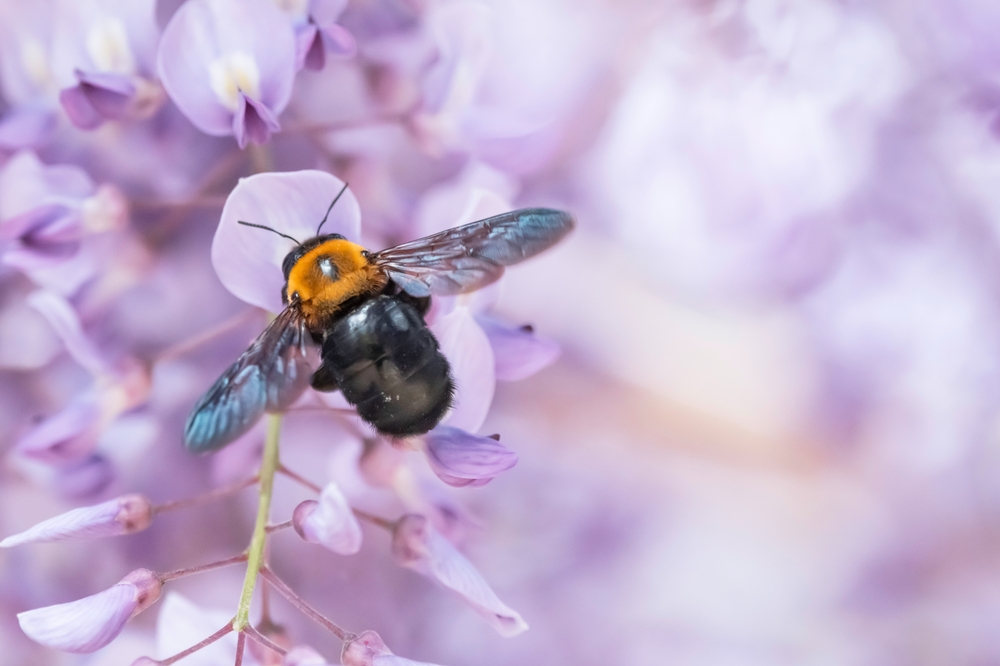
Commonly mistaken for bumblebees because of their size and shape, carpenter bees are a large species of bees common across many parts of the United States, particularly the southern and southeastern states. However, while bumblebees have fuzzy abdomens, carpenter bees have hairless, shiny ones instead.
Carpenter bees are more solitary than other types of bees but can still display territorial behavior under the right conditions. Males do not sting, although they’ve been known to hover persistently near people who come too close. Females can sting, but usually only do so if provoked.
Carpenter bees are so named because they don’t live in hives. Instead, they burrow into bare or exposed wood to create egg galleries for hatching and sheltering their young.
How Big a Problem Are Carpenter Bees in the Carolinas?
Since carpenter bees don’t swarm or form huge hives like other bees, spotting one or two on your property might not seem like a big deal. But they can still spell trouble for your Carolina home or business, especially over time. Here’s how:
- Carpenter bee tunnel systems weaken the integrity of your property, especially over time, eventually leading to expensive repairs.
- The accumulated effects of visible entry holes and sawdust (sometimes called frass) can ruin the look and feel of wooden buildings and structures.
- Wood compromised by carpenter bee tunnels is susceptible to moisture intrusion, wood rot, and similar issues.
- Secondary damage often occurs when woodpeckers and other birds start pecking at affected wood to access hidden larvae and eggs.
- Many bees return to the same locations year after year, adding onto existing tunnel systems and creating new damage each time.
If you suspect carpenter bees have invaded your property, don’t wait for the problem to escalate. The sooner you implement a good carpenter bee treatment regimen, the better.
What Are the Signs of Carpenter Bee Activity?
Since carpenter bees are easy to mistake for other species, it’s a good idea to know what to look for, especially if you live in an area where infestations are common. Here are some telltale signs to be aware of:
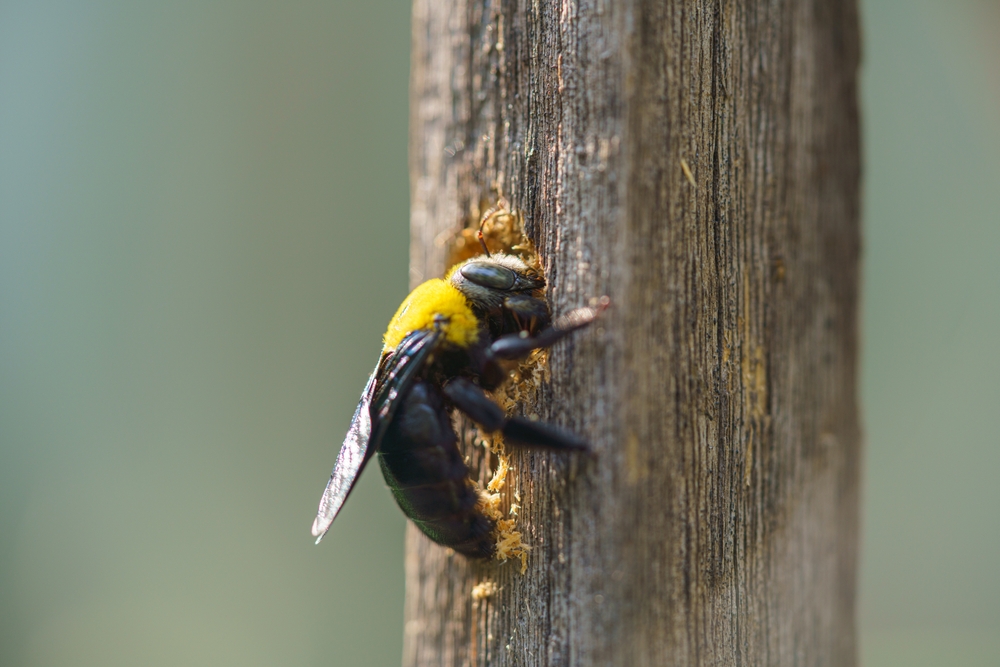
- Perfectly round holes in wooden surfaces on your property (most are about the size of a dime)
- Unexplained sawdust accumulation near holes in wood or underneath wooden property features
- Yellowish staining around holes in wood (from elimination of bee waste)
- Frequently seeing large bees darting, buzzing, or hovering near wooden property features or trim (e.g., wooden rafters or eaves)
- Lots of woodpecker activity on or near your property (as the birds like to feed on bee larvae)
If you’ve been noticing one or more of the above around your home, business, or other Carolina property, you’re looking at a potential carpenter bee problem. The carpenter bee control experts of Clarks Pest Control can help you confirm and move forward with a safe, effective treatment strategy.
How Can Carolina Property Owners Prevent Carpenter Bees?
The best way to keep carpenter bees from targeting your property is to make it as unattractive to them as possible. Let’s go over some effective strategies.
Keep wooden surfaces painted
Carpenter bees are more likely to target exposed, untreated, or otherwise bare wood. Paint, staining, and other treatments make wood harder to penetrate and much less appealing to bees looking for a cozy place to nest. There are also insecticidal paints and wood finishing products to consider.
Seal possible entry points
Regularly inspect your home for entry points that pests can use to gain access. Examples include holes, gaps, and cracks in your property’s foundation or siding. Promptly seal any you find with steel wool, putty, or caulk.
Stay on top of repairs
Promptly addressing even minor property damage helps keep carpenter bees and other pests from targeting your home. It doesn’t take much to invite a potentially big problem into your life.
How Clarks Pest Control Approaches Carpenter Bee Control
Clarks specializes in safe, thorough pest control treatments that not only eliminate existing problems but prevent them from coming back. Here’s a closer look at what sets us apart from everyone else.
Environmentally responsible treatments
Many people are hesitant to call in a professional exterminator to deal with carpenter bees or other pests due to health concerns. They worry about harsh treatments and products that could jeopardize their health, impact non-target species, or otherwise harm the Carolinas’ beautiful ecosystems.
With Clarks Pest Control in your corner, you can finally put those worries to bed. Our carpenter bee control techniques, products, and prevention strategies are safe, effective, and environmentally conscious. Get rid of carpenter bees. Keep your health and your peace of mind.
Thorough inspections and custom treatments
Every Clarks treatment strategy starts with a thorough inspection of your home, business, or other property. The goal is to identify every active carpenter bee nesting site and potential access point. We also evaluate your property for existing signs of repeat infestation and associated structural damage.
From there, we design a comprehensive carpenter bee treatment and prevention strategy with your unique needs, property, and pest control goals in mind. (Please note that we only treat carpenter bee infestations at safely accessible ground-level locations.)
Responsive service and comprehensive expertise
At Clarks Pest Control, we don’t just know carpenter bees and other pests. We understand how they affect homes and businesses across North and South Carolina, and we leverage that expertise to protect our clients. We also understand that active pest control issues should be addressed as soon as possible, so we always promptly respond to calls and potential infestations.
And we help with a lot more than carpenter bees. Turn to Clarks for a complete range of safe, efficient pest control options you can trust with your property. Schedule your consultation today!
Carpenter Bee Control in the Carolinas FAQs
Still have questions about Carolina carpenter bee control? Check out some frequently asked questions below:
How long do carpenter bees usually live?
Typically, male carpenter bees live for about a year, and they die after mating. Female carpenter bees, however, can live longer than two years.
How to keep carpenter bees away for good?
Carpenter bees often seek untreated soft woods that they can easily bore into. In order to avoid that, you should consider:
- Only having painted wood on your property
- Opting for hard woods over soft woods
- Ensuring any wood left outdoors is in good condition (no dimples, cracks, or grooves)
- Removing any old or rotten wood
- Using natural repellents
What do carpenter bees eat?
While it may be easy to assume carpenter bees eat wood, this is not actually the truth. Boring into wood is specifically to create nests for their larvae. Carpenter bees actually forage nectar and pollen like other bees. Nectar provides energy, and pollen provides protein.
How to get rid of carpenter bees?
Carpenter bees are a huge risk to wooden homes, decks, sheds, and other structures. You have several options to get rid of these unwanted insects, such as:
- Applying treatments to exterminate them (useful to a certain degree, better results come from hiring an exterminator)
- Setting traps (often have wood holes bored into them at an angle so the bees can enter, but not leave)
GET A FAST FREE ESTIMATE
QUICK LINKS