
Fleas may be tiny, but property owners across North and South Carolina know how easily they can add up to huge headaches regardless. They’re fast-moving and hard to spot. Fleas also have a way of showing up seemingly out of nowhere and quickly taking over bedding, carpeting, furniture, and even outdoor spaces.
Contrary to popular belief, you don’t need pets to end up with a flea problem on your hands, especially in the Carolinas. Factors like high local humidity, roaming wildlife, previous tenants, and even short stretches of time spent outdoors can all bring fleas into your personal space.
Having a good local flea exterminator in your corner is a must, and Clark’s Pest Control is proud to be the Carolinas’ go-to choice for reliable, long-lasting flea control that property owners can trust.
What Carolina Property Owners Need to Understand About Fleas
Fleas are tiny, wingless parasites that survive by feasting on the blood of birds and mammals. However, many fleas (including the cat flea, the most common species in the Carolinas) aren’t at all picky about who they bite. Wildlife, pets, and humans are all fair game.
But what makes flea populations so hard to manage is actually their four-stage lifecycle (egg, to larva, to pupa, to adult). Even in cases where you successfully eliminate visible adult fleas, there are likely countless eggs and larvae in cracks, carpeting, and pet bedding that you can’t see.
Warm, humid environments like the kind the Carolinas are famous for also speed up the flea lifecycle – exactly why persistent infestations across both states are so common. Professional flea control in North Carolina and South Carolina is really the best way to keep things managed.
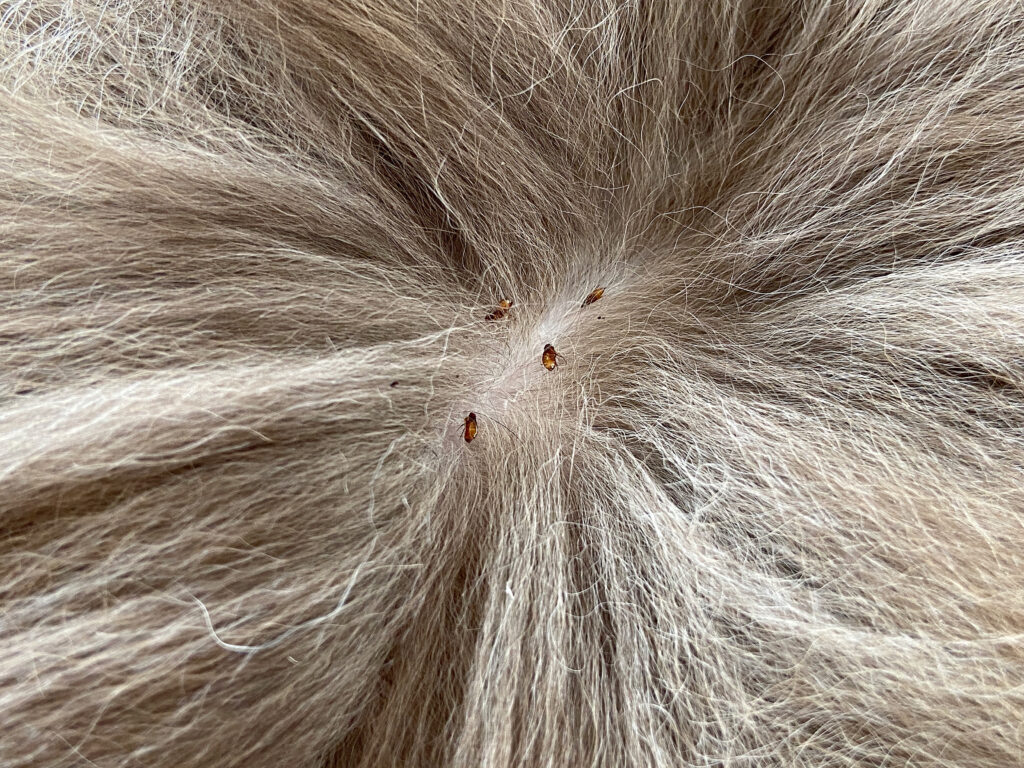
Fleas Are More Than a Minor Irritation
The persistent itching may be the first thing you think of when you picture dealing with a flea infestation, but these hardy parasites actually bring an entire host of problems along with them:
- Bites that linger: Flea bites cause red, irritated bumps and itchiness that can become extremely uncomfortable, especially on the ankles or lower legs.
- Health risks for pets: A flea infestation can leave your pet dealing with skin infections, tapeworms, and even anemia. Many household pets also suffer from flea allergy dermatitis, which only adds to their discomfort.
- Rapid reproduction: A single female flea can lay 50 eggs per day on average, exactly how infestations drift out of control so quickly.
- Hidden populations: By the time you’re actually seeing fleas, you can trust that there are many more hidden in your carpet, upholstery, or yard.
In other words, fleas are so much more than just a nuisance. If left unaddressed, a flea infestation will quickly grow and create an increasing number of problems, including the above examples.
Why do Fleas Thrive in North Carolina and South Carolina?
If you’ve lived in North or South Carolina for long, then you’ve probably already noticed that flea season feels like it never actually ends. That’s not your imagination, as fleas really are a near-year-round problem here:
- Humidity levels stay relatively high for much of the year, making it easier for fleas to thrive for longer.
- Many parts of the Carolinas enjoy mild winters.
- Wildlife is abundant and diverse, even in suburban neighborhoods.
- Shady yards with thick, lush vegetation are common for Carolina homes.
- Coastal locations in North and South Carolina give fleas breeding conditions that are even more ideal.
It’s not uncommon for a Carolina property owner to start noticing fleas right after adopting a pet, seeing wildlife near their property, returning from a trip, or even just experiencing a particularly humid season or two. Renters moving into previously occupied homes can easily inherit dormant flea eggs just waiting to hatch, as well.
How to Recognize a Flea Problem Early
Fast detection is the key to keeping fleas from making life unbearable. The sooner you recognize the signs of a developing infestation and seek out professional flea control in South Carolina or North Carolina, the better. Early signs to watch out for include:
- Pets that seem to be scratching more than usual
- Black specks (flea dirt/droppings) on bedding, upholstery, etc.
- Sightings of jumping adult fleas
- Red, itchy bites on ankles or on the lower legs
- Small, white eggs in carpeting or on fabric
If you’ve noticed any of these, don’t wait to act. Call a trusted local flea exterminator (like Clark’s Pest) as soon as possible.

Clark’s Comprehensive Flea Control Process for Carolina Homes
Successful flea control strategies call for more than just a quick treatment session or two. At Clark’s Pest, we utilize a thorough full-lifecycle approach to get rid of fleas and make sure results last.
Detailed multi-step treatment plans
Every Clark’s Pest Control flea management strategy starts with a careful indoor-outdoor inspection to determine where fleas are hiding and breeding. We then implement targeted, fully customized treatments that address larvae and breeding zones, in addition to adult fleas – carefully selected products administered by fully trained professionals.
Guidance and follow-up support
At Clark’s, we don’t just treat a client’s home and disappear. We proudly support our clients via comprehensive prevention guidance for property owners, as well as follow-up care to prevent issues from recurring.
Our ultimate goal isn’t just to eliminate fleas at Clark’s Pest Control. Carolina property owners know they can count on us to keep pests from ever coming back. Contact a Clark’s representative today, and tell us how we can help.
Flea Control FAQs
Still have questions about flea control in the Carolinas? Check out the following frequently asked questions for guidance.
Can fleas survive all year indoors?
Yes. Since homes stay warm, safe, and comfortable all year, fleas can stay active even through the winter.
Do fleas only come from pets?
No. In fact, you don’t even need to own a pet to find yourself dealing with fleas. Possums, raccoons, squirrels, and even neighborhood strays can easily bring fleas to your property.
How long does it take to get rid of fleas?
The multi-stage flea lifecycle means full control can take several weeks. However, all Clark’s Pest treatment control programs are designed with this in mind.
Are your treatmens safe for my family and pets?
Yes. All treatments we use at Clark’s Pest adhere to strict safety guidelines and are always applied only by trained professionals.
GET A FAST FREE ESTIMATE
QUICK LINKS